
Carbohydrates serve as the body’s primary energy source, breaking down into glucose to fuel the brain, muscles, and daily activities. The ideal daily intake in grams depends on factors like age, gender, activity level, and health goals, typically ranging from 130 grams minimum up to 300-400 grams or more for active individuals.
Understanding Carbohydrates
Carbohydrates consist of sugars, starches, and fibers found in foods like grains, fruits, vegetables, and legumes. Simple carbs, such as those in fruits and milk, provide quick energy, while complex carbs in whole grains and veggies offer sustained release. Fiber, a type of carb the body doesn’t fully digest, supports gut health and stabilizes blood sugar.
The brain alone requires about 130 grams of carbs daily to function properly, making this the minimum recommended intake for adults. Beyond energy, carbs help spare protein for muscle repair and prevent the body from breaking down fat too rapidly, which can produce ketones. Choosing high-quality sources maximizes nutritional benefits like vitamins, minerals, and antioxidants.
Official Daily Carb Recommendations
Health authorities recommend that carbs comprise 45-65% of total daily calories for most adults. On a standard 2,000-calorie diet, this translates to 225-325 grams of carbs per day. The U.S. Food and Drug Administration lists 275 grams as a general daily value on nutrition labels for reference.
World Health Organization guidelines stress whole food sources, advising at least 400 grams of fruits and vegetables daily alongside 25 grams of fiber. These ranges assume a balanced diet; individual needs may vary, so personalization ensures better results without nutrient shortfalls.
Factors Affecting Your Carb Needs
Several personal factors influence optimal carb grams. Age plays a role—younger adults and children often need more for growth, while seniors may require slightly less due to slower metabolism. Gender matters too; men typically need higher amounts than women because of greater muscle mass and calorie expenditure.
Activity level is crucial: sedentary people thrive on lower ends, while athletes demand higher intakes. Health conditions like diabetes or pregnancy adjust targets—pregnant women need at least 175 grams, diabetics often 130-225 grams. Weight goals, such as loss or gain, further tailor amounts for effectiveness.
Carb Intake by Activity Level
Sedentary individuals, with minimal exercise, benefit from 130-225 grams to maintain energy without excess storage as fat. Those moderately active, exercising 30-60 minutes most days, should aim for 225-325 grams to support recovery and prevent fatigue.
You can also convert Grams of Crabs in to various measurement.
Endurance athletes training over an hour daily scale up to 300-500 grams, calculated as 3-5 grams per pound of body weight. Elite competitors in ultra-endurance events might exceed 700 grams, prioritizing glycogen replenishment. Always pair with hydration and balanced macros.
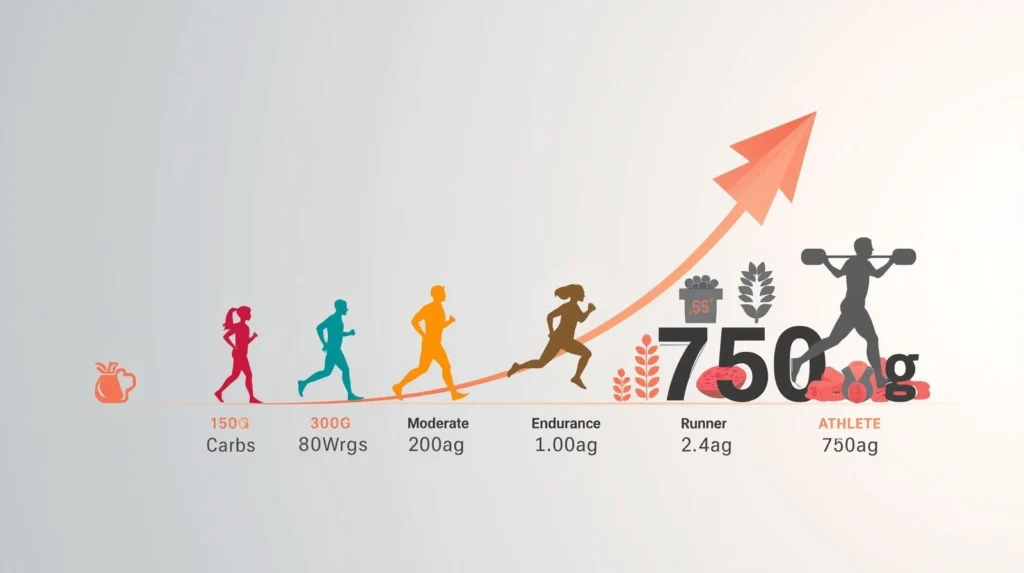
| Activity Level | Grams per Pound Body Weight | Example (150 lb Person) |
|---|---|---|
| Sedentary | 1-1.5 g/lb | 150-225 grams |
| Moderate | 2-3 g/lb | 300-450 grams |
| Endurance | 3-5 g/lb | 450-750 grams |
| Ultra-Intense | 5.5+ g/lb | 825+ grams |
Carbs for Weight Loss and Management
For weight loss, 50-150 grams daily creates a calorie deficit while sustaining energy, often leading to 1-2 pounds lost per week. Low-carb approaches under 130 grams promote fat burning through mild ketosis, curbing appetite via stable blood sugar. Very low intakes of 20-50 grams suit short-term keto but require monitoring.
Combine with protein and fats for fullness; for example, on 1,800 calories, 100 grams provides balance. Sustainable loss favors gradual reduction over extremes, allowing long-term adherence. Track progress and adjust every two weeks based on results.
Special Considerations for Populations
Children need carbs scaled to age—toddlers around 130 grams minimum, teens up to 300 grams for growth spurts. Pregnant and breastfeeding women require 175-210 grams extra to support fetal development and milk production.
People with diabetes personalize to 45-60 grams per meal, emphasizing low-glycemic index foods to manage blood sugar. Older adults focus on 130-250 grams with high fiber to combat constipation and support heart health. Athletes with insulin sensitivity issues consult professionals for tweaks.
High-Quality vs. Low-Quality Carbs
Prioritize nutrient-dense carbs like oats, quinoa, sweet potatoes, berries, and legumes, which pack fiber, vitamins, and minerals. These digest slowly, preventing spikes and crashes while promoting satiety. Avoid refined options like white bread, sugary cereals, and sodas, which lack nutrition and contribute to weight gain.
Whole grains provide B vitamins for energy metabolism; fruits offer antioxidants; veggies deliver volume with few calories. Legumes double as protein sources, enhancing meal balance.
- Whole grains: Brown rice, barley, oats
- Starchy vegetables: Sweet potatoes, corn, peas
- Fruits: Apples, berries, bananas (in moderation)
- Legumes: Lentils, chickpeas, black beans
Dangers of Too Few Carbohydrates
Consuming under 130 grams risks muscle breakdown as the body converts protein to glucose, leading to weakness and slowed metabolism. Common symptoms include fatigue, headaches, constipation from low fiber, and irritability known as “keto flu.”
Long-term, very low-carb diets may increase heart disease risk, nutrient deficiencies, and gut issues due to microbiome disruption. Athletes experience performance dips from depleted glycogen stores. Balance prevents these while allowing benefits like initial water weight loss.
Dangers of Excessive Carbohydrates
Over 65% of calories from carbs, especially refined ones, promotes fat accumulation, insulin resistance, and type 2 diabetes risk. High intake spikes triglycerides, lowers good cholesterol, and triggers hunger cycles from blood sugar rollercoasters.
Obesity links to excess simple carbs displacing proteins and fats. Metabolic syndrome, including high blood pressure, worsens. Moderation with quality sources mitigates these, supporting steady energy and health.
Step-by-Step: Calculate Your Carb Needs
First, estimate daily calories using the Harris-Benedict equation: for men, 88.362 + (13.397 × weight in kg) + (4.799 × height in cm) – (5.677 × age); multiply by activity factor (1.2 sedentary to 1.9 very active). Women use 447.593 + (9.247 × kg) + (3.098 × cm) – (4.330 × age).
Next, multiply calories by 0.45-0.65 for carb calorie range, then divide by 4 (calories per gram). Example: 2,500 calories × 0.55 = 1,375 carb calories ÷ 4 = 344 grams. Apps refine this with body composition data. Recalculate quarterly or after life changes.
Top Food Sources for Healthy Carbs
Build meals around these for variety and nutrition:
- Grains: 1 cup cooked oats (54g carbs), quinoa (39g per cup)
- Vegetables: Medium sweet potato (24g), cup broccoli (11g)
- Fruits: Medium apple (25g), cup berries (15g)
- Legumes: 1 cup lentils (40g), chickpeas (45g)
Aim for 25-30 grams fiber daily by including peels and whole forms. Portion control keeps totals on target.
Sample 7-Day Meal Plan for 225 Grams Carbs
Designed for moderate activity on ~2,000 calories. Adjust portions as needed.
Day 1: Breakfast: Oatmeal with banana and almonds (60g carbs). Lunch: Quinoa salad with chickpeas and veggies (70g). Dinner: Grilled chicken with sweet potato and greens (70g). Snacks: Apple and yogurt (25g). Total: 225g.
Day 2: Whole-grain toast with eggs and avocado (50g). Turkey and veggie wrap on whole wheat (60g). Salmon with brown rice and broccoli (80g). Handful nuts and pear (35g).
Day 3: Berry smoothie with oats and spinach (55g). Lentil soup with whole-grain roll (65g). Whole-wheat pasta primavera (70g). Carrot sticks with hummus (35g).
Day 4: Greek yogurt parfait with granola and berries (45g). Chickpea salad with cucumber (70g). Brown rice stir-fry with tofu (80g). Orange (30g).
Day 5: Whole-grain pancakes with fruit topping (60g). Veggie burger on bun with side salad (60g). Baked potato with lean beef and beans (70g). Mixed berries (35g).
Day 6: Chia seed pudding with oats (50g). Bean burrito bowl with rice (75g). Couscous with roasted veggies (70g). Banana (30g).
Day 7: Overnight oats with apple (50g). Sweet corn and black bean salad (65g). Barley vegetable soup (80g). Pear (30g).
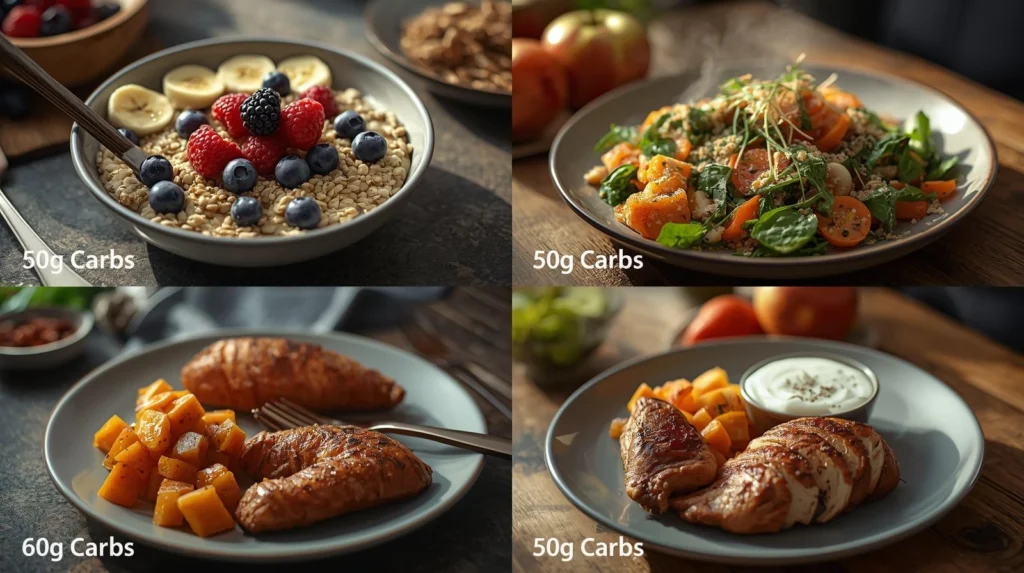
Each day balances macros, emphasizes whole foods, and hits fiber goals.
Practical Tracking Tips
Read nutrition labels: total carbs minus fiber equals net carbs. Use apps to scan barcodes and log meals for automatic tallies. Weigh portions initially for precision, then eyeball estimates.
Monitor how you feel—low energy signals increase, stalled weight loss suggests decrease. Weekly weigh-ins and energy journals guide adjustments. Consult a dietitian for medical needs or persistent issues.
Frequently Asked Questions
How many grams of carbs per day for weight loss?
50-150 grams creates a sustainable deficit, promoting fat loss while preserving muscle and energy.
Is 100 grams of carbs per day considered low?
Yes, it qualifies as low-carb, supporting ketosis-like effects for quicker results, but ensure nutrient variety.
How many carbs on a keto diet?
Typically 20-50 net grams daily to maintain ketosis and accelerate fat burning.
What happens if I eat zero carbs?
The body shifts to protein and fat breakdown, risking muscle loss, fatigue, and long-term health issues like nutrient gaps.
How many carbs for building muscle?
3-5 grams per pound of body weight, especially post-workout, to replenish glycogen and aid recovery.
Recommended carbs for diabetics per day?
120-225 grams, distributed evenly across meals with low-GI choices to control blood sugar.
Do carbs directly cause weight gain?
Excess calories from any source do, but refined carbs more readily due to insulin spikes and low satiety.
When is the best time to eat carbs?
Around workouts for optimal uptake; otherwise, spread evenly to maintain steady energy.
How much fiber should pair with daily carbs?
At least 25 grams for adults, sourced from whole foods to support digestion and heart health.
Carb differences for women versus men?
Women average 200-250 grams; men 250-350 grams, reflecting higher calorie needs.