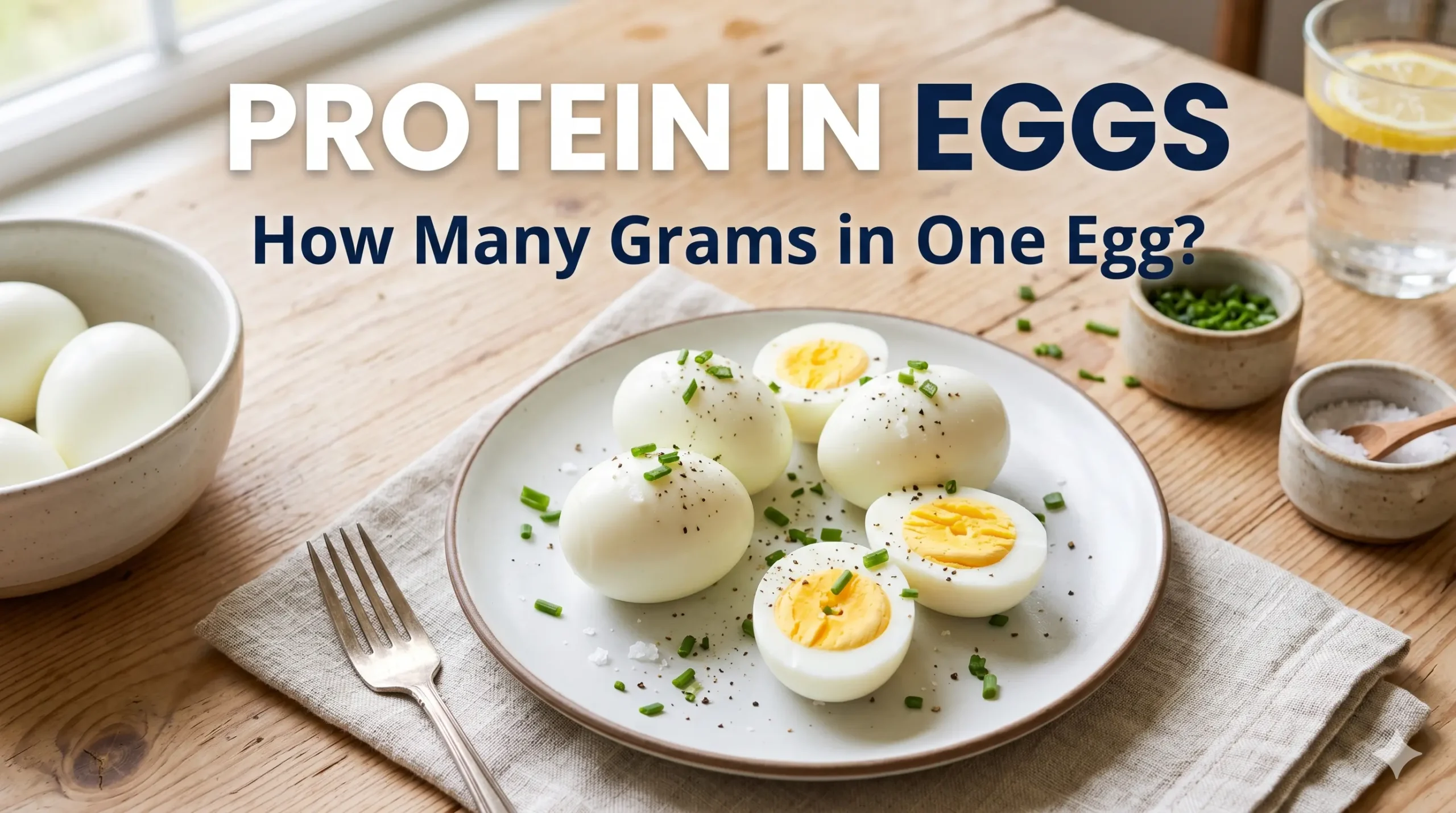
Eggs are one of the most popular and affordable sources of high‑quality protein in the world. They are quick to cook, easy to add to any meal and packed with nutrients that support muscle health, weight management and overall wellbeing.

If you are tracking your macros, trying to build muscle or simply want to eat healthier, knowing exactly how many grams of protein are in an egg helps you plan your diet with confidence.
How Many Grams of Protein Are in One Egg?
The amount of protein in an egg depends mainly on its size. On average, most eggs contain between about 5 and 8 grams of protein each.
A typical large egg that you commonly buy in stores usually provides around 6–7 grams of high‑quality protein.
Protein in Eggs by Size
Egg protein increases as the egg size increases, but the difference from one size to the next is small and easy to remember.
Approximate protein per whole egg:
- Small egg: about 4.9–5 g protein
- Medium egg: about 5.7–6 g protein
- Large egg: about 6–7 g protein
- Extra‑large egg: about 7–7.3 g protein
- Jumbo egg: about 8–8.2 g protein
For quick meal planning, you can safely count one large egg as roughly 6 grams of protein and still be very close to the actual value.
Egg White vs Egg Yolk: Where Is the Protein?
Many people assume all the protein is in the egg white, but both the white and the yolk contribute to the total protein.
- Egg white: The white contains more than half of the egg’s total protein by weight and is very low in calories and fat, making it popular in high‑protein, low‑fat diets.
- Egg yolk: Gram‑for‑gram, the yolk actually has a slightly higher protein concentration, but there is less yolk than white in one egg.
In a typical large egg:
- The white provides around 3.5–4 g of protein.
- The yolk provides around 2.4–2.7 g of protein.
This means roughly 60–65% of the protein comes from the white and 35–40% comes from the yolk, even though the yolk carries most of the vitamins, minerals and healthy fats.
Does Cooking Change the Protein Amount?
Cooking methods like boiling, scrambling or frying do not significantly change the total grams of protein in an egg. A large raw egg and a large boiled egg still contain roughly the same 6–7 grams of protein. The main difference is how well your body absorbs that protein.
Your body can use much more of the protein from cooked eggs than from raw eggs. In simple terms, you get more usable protein from cooked eggs, so cooking your eggs is better for digestion, muscle growth and safety.
Is Egg Protein “High Quality”?
Egg protein is often used as a “gold standard” to compare other protein sources. It is considered a complete protein, which means it contains all nine essential amino acids that your body cannot make on its own.
Measures of protein quality and digestibility consistently rank egg protein very highly, alongside sources like dairy and lean meat.
Because of this, eggs are an excellent choice for:
- Muscle repair and growth
- Recovery after workouts
- Support during weight loss or maintenance, as they are filling and nutrient‑dense
Whole Eggs vs Egg Whites for Fitness and Muscle Building
From a macro‑tracking point of view, egg whites are almost pure protein with very little fat and fewer calories. This makes them ideal when you want high protein but need to keep calories low.
However, whole eggs offer extra advantages for muscle building because the yolk contains many nutrients that support recovery, hormone production and overall health.
Research comparing whole eggs with the same amount of protein from egg whites suggests that whole eggs can stimulate muscle protein synthesis more effectively after resistance training. This is likely because of the extra vitamins, minerals, healthy fats and other compounds in the yolk that help your body use the amino acids more efficiently.
How Many Eggs Do You Need for Daily Protein?
Daily protein needs depend on your body weight, activity level and goals:
- General health: around 0.8 g of protein per kilogram of body weight per day for the average adult
- Active people and those trying to build or maintain muscle: often 1.2–2.0 g per kilogram of body weight per day, depending on training intensity
Let’s take a simple example target of 60 g of protein per day:
- 1 large egg = 6 g protein
- 3 large eggs = 18 g protein
- 4 large eggs = 24 g protein
In real life, you will usually combine eggs with other protein sources such as pulses, dairy, paneer, lean meat, fish, tofu or Greek yogurt to comfortably reach your total protein requirement.
Practical Examples of Egg Protein in Meals
Here are some easy combinations to understand how egg protein adds up in common meals:
- Breakfast idea:
2 large eggs (around 12 g protein) plus a cup of yogurt or milk can give you roughly 20–24 g of protein, depending on your dairy choice. - High‑protein snack:
1 boiled egg (about 6 g protein) with a handful of nuts can provide around 10–12 g of protein in a small, filling snack. - Muscle‑focused meal:
2 whole eggs plus 2 extra egg whites can deliver around 20–24 g of protein with a controlled fat intake, which is popular among gym‑goers and athletes.
You can adjust the number of eggs and pair them with other protein‑rich foods to match your specific macro targets.
Health Benefits of Getting Protein from Eggs
Eggs do more than just increase your protein intake. A single large egg also provides:
- Around 70–80 calories with 6–7 g of protein
- Essential vitamins like B12, riboflavin and folate
- Fat‑soluble vitamins such as A, D, E and K mainly in the yolk
- Important minerals including selenium, phosphorus, iron and zinc
Because they are nutrient‑dense and satisfying, eggs can help control hunger, support muscle mass and provide steady energy when included as part of a balanced diet.
Are Eggs Safe to Eat Every Day?
For most healthy people, moderate daily egg consumption fits well within a balanced diet. Many nutrition experts consider one to three eggs per day reasonable for healthy individuals, as long as overall saturated fat and cholesterol intake are managed from the rest of the diet.
If you have cholesterol issues, heart disease or other medical conditions, you should always follow the advice of your doctor or dietitian regarding how many eggs are suitable for you.
FAQs About Protein in Eggs
1. How many grams of protein are in a boiled egg?
A boiled egg has essentially the same protein as a raw egg of the same size. A boiled large egg still contains around 6–7 g of protein, just like a large egg cooked in any other way.
2. How much protein is in just the egg white?
The white from one large egg provides roughly 3.5–4 g of protein and very few calories. This makes egg whites a great choice when you want more protein without much fat or cholesterol.
3. How much protein is in the egg yolk?
The yolk from one large egg usually provides about 2.4–2.7 g of protein.
It also contains most of the egg’s vitamins, minerals and healthy fats, which support brain health, eye health and hormone production.
4. Are raw eggs better than cooked eggs for protein?
Raw eggs are not better than cooked eggs for protein. Your body absorbs far less protein from raw eggs than from cooked eggs. Cooking also reduces the risk of food‑borne illness, so it is safer and more effective to eat eggs cooked.
5. Is egg protein better than plant protein?
Eggs offer complete, highly digestible protein and are an excellent reference point for protein quality. However, a healthy diet can include both animal and plant proteins; combining eggs with lentils, beans, tofu, nuts and seeds gives you a balanced mix of amino acids and other nutrients.
6. How many eggs should I eat per day for muscle building?
There is no single “magic” number. Many active people include 2–4 eggs per day along with other protein sources, depending on their total calorie and protein targets. Focus first on meeting your daily protein goal (for example, 1.2–2.0 g per kg of body weight), then decide how many of those grams you want to get from eggs versus other foods.