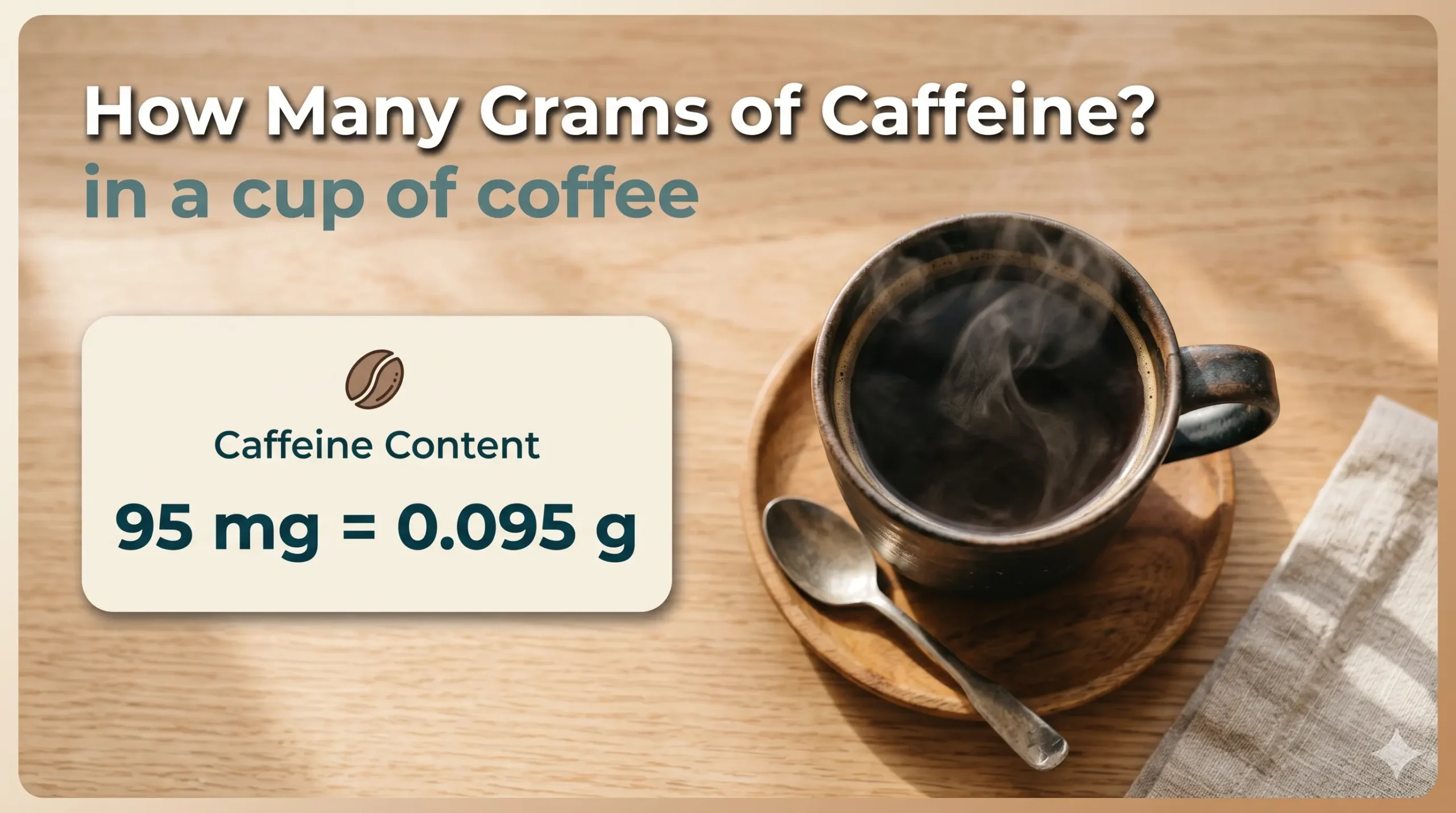
A typical 8-ounce cup of brewed coffee holds around 95 milligrams of caffeine, which equals roughly 0.095 grams. This amount can shift based on the coffee variety, preparation style, and serving size, making it key to understand these differences for better daily choices.

Many people ask about caffeine in grams because milligrams feel too small, but the math is straightforward: 1 gram equals 1,000 milligrams, so coffee’s caffeine stays in the low milligram range per cup.
Caffeine Breakdown by Serving Size
The standard “cup” is often 8 ounces for home brewing, but café sizes grow larger. Here’s a clear comparison:
| Coffee Type | Serving Size | Caffeine (mg) | Caffeine (grams) |
|---|---|---|---|
| Brewed drip coffee | 8 oz | 95 | 0.095 |
| Brewed drip coffee | 12 oz | 140–200 | 0.14–0.20 |
| Espresso (single shot) | 1 oz | 63 | 0.063 |
| Instant coffee | 8 oz | 62 | 0.062 |
| Decaf brewed | 8 oz | 1–2 | 0.001–0.002 |
| Cold brew | 8 oz | 100–200 | 0.10–0.20 |
This table uses averages from reliable health sources to show real-world ranges. Larger servings or stronger brews naturally pack more caffeine.
Factors That Change Caffeine Levels
Brewing time and method play a major role. Longer steeps, like in French press or cold brew, pull out more caffeine from the grounds. Hotter water and finer grinds also increase extraction efficiency.
Bean type and roast matter too. Robusta beans hold nearly twice the caffeine of Arabica, though Arabica is more common in specialty coffee. Lighter roasts retain slightly more caffeine than dark roasts, as roasting burns off a tiny amount.
The coffee-to-water ratio is simple to control at home: more grounds mean more caffeine in your cup.
Common Coffee Types Compared
- Drip or filter coffee: Steady 80–140 mg per 8 oz, ideal for everyday brewing.
- Espresso: Concentrated at 63 mg per shot, but lattes add milk without extra caffeine.
- Instant coffee: Convenient but lower at 30–90 mg per cup due to processing.
- Cold brew: Often strongest at 150+ mg per 8 oz from long extraction.
Decaf removes most caffeine but leaves trace amounts, so it’s not zero.
Daily Intake and Health Tips
Healthy adults can handle up to 400 mg of caffeine daily, about four 8 oz cups of brewed coffee. Exceeding this may cause jitters, sleep issues, or faster heart rate in sensitive people.
Track your intake across sources like tea or soda. Pregnant individuals or those with anxiety should aim lower, around 200 mg or less daily.
FAQs
How many grams of caffeine in a cup of coffee exactly?
About 0.095 grams (95 mg) in an 8 oz brewed cup, with ranges from 0.06 to 0.20 grams depending on type.
Does brewing method affect caffeine?
Yes, cold brew and French press extract more than drip, often 100–200 mg per cup.
Is decaf coffee caffeine-free?
No, it has 0.001–0.002 grams (1–2 mg) per cup.
Which coffee has the most caffeine?
Cold brew or robusta-based brews, up to 0.20 grams per 8 oz.
How much is safe daily?
Up to 400 mg (0.4 grams) for most adults, or four average cups.