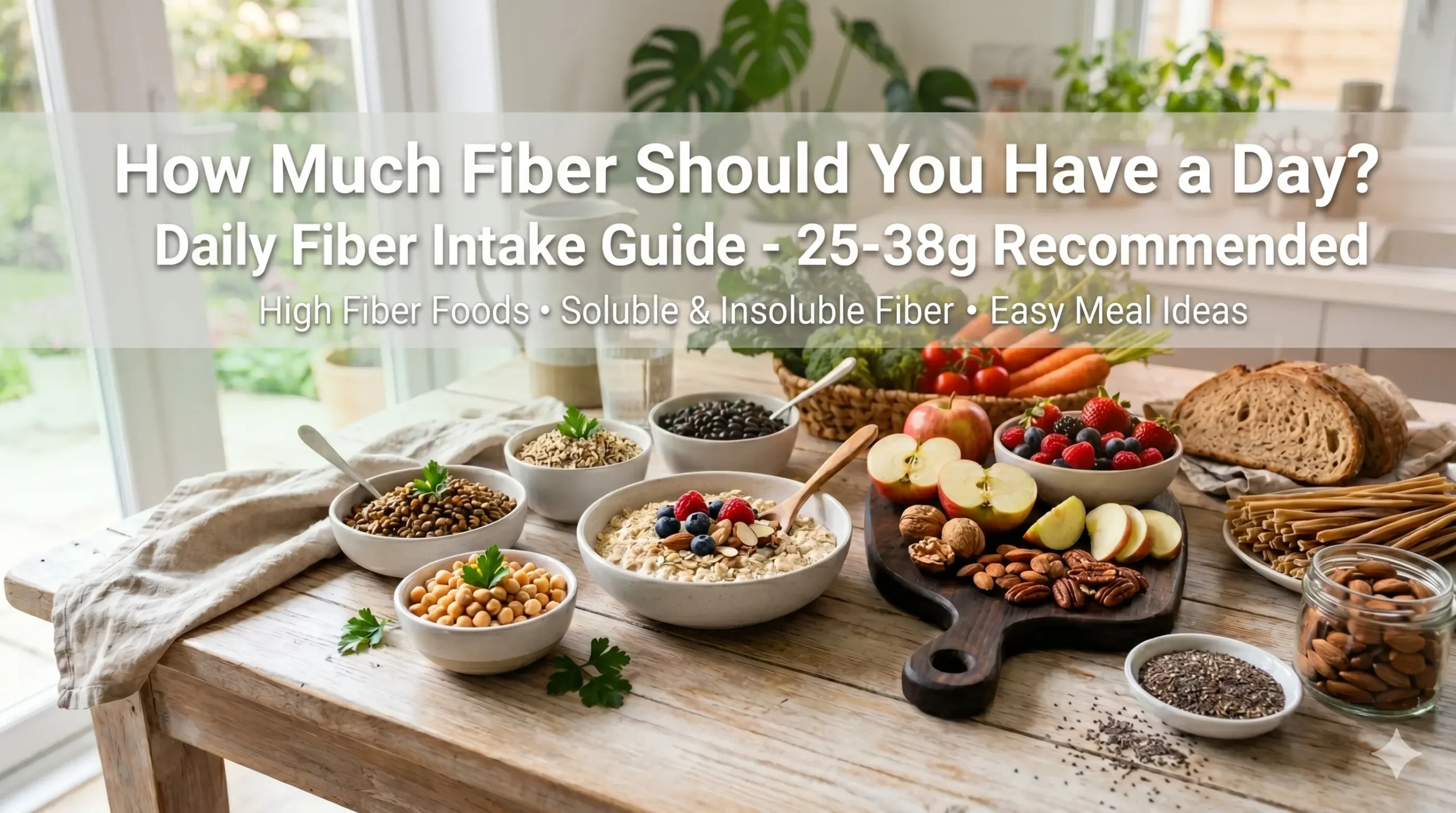
Fiber is one of the most overlooked nutrients in everyday eating, yet it plays a major role in digestion, fullness, heart health, and overall wellness. If you are wondering how much fiber should you have a day, the answer depends on your age, sex, and calorie needs, but most adults can benefit from aiming for a clear daily target and building meals around fiber-rich foods.

Why Fiber Matters
Fiber is a type of carbohydrate found only in plant foods. Unlike sugar and starch, fiber is not fully broken down in the digestive system, which gives it several unique health benefits. It helps keep bowel movements regular, supports gut health, and can make meals more filling so you stay satisfied for longer.
Many people think of fiber only as a digestion nutrient, but it does much more than that. A fiber-rich diet can support healthy cholesterol levels, improve blood sugar response after meals, and help you build a more balanced eating pattern overall. Because it works in so many different ways, fiber is one of the easiest nutrients to focus on if you want to improve your diet without making it overly complicated.
Another reason fiber matters is that many modern diets are low in it. Processed foods, refined grains, and low-vegetable meals often leave people short of their daily needs. The result is that people may feel hungry sooner, struggle with irregular digestion, or miss out on the long-term benefits that come from eating more plant-based foods.
How Much Fiber Should You Have a Day?
For most adults, a good daily target is about 25 to 38 grams of fiber per day. A simple way to remember this is that women generally need slightly less fiber than men, while calorie intake also matters.
A common nutrition guideline is to aim for about 14 grams of fiber for every 1,000 calories you eat. That means if your daily intake is around 2,000 calories, a target near 28 grams of fiber is a practical benchmark. This makes fiber easier to think about because it connects naturally to your total food intake rather than forcing you to count only one nutrient.
Here is a general guide:
- Adult women under 50: about 25 grams per day.
- Adult men under 50: about 38 grams per day.
- Women over 50: about 21 grams per day.
- Men over 50: about 30 grams per day.
Children, teens, and older adults have different needs, but the same basic idea applies: the more calorie needs you have, the more fiber you usually need as well. If your diet is based on whole foods, fruits, vegetables, legumes, nuts, and whole grains, reaching your target becomes much easier.
Soluble and Insoluble Fiber
Not all fiber works in the same way. There are two main types: soluble fiber and insoluble fiber. Both are important, and both should be part of a healthy diet.
Soluble fiber dissolves in water and forms a gel-like substance in the digestive tract. It is found in foods such as oats, apples, beans, lentils, and citrus fruits. This type of fiber may help support healthy cholesterol and blood sugar levels, which is one reason it is often highlighted in heart-healthy diets.
Insoluble fiber does not dissolve in water. Instead, it adds bulk to stool and helps food move through the digestive system. You can find it in whole wheat products, nuts, seeds, vegetables, and many whole grains. If you struggle with constipation or irregularity, insoluble fiber can be especially helpful.
The best approach is not to choose one type over the other. A balanced, high-fiber diet naturally includes both, and that gives your body the widest range of benefits.
Signs You May Need More Fiber
If you are not getting enough fiber, your body often gives small warning signs. The most common sign is irregular digestion, especially constipation or harder stools. You may also notice that you feel hungry again soon after eating, even if your meal seemed large enough.
Low fiber intake can also show up in more subtle ways. Your meals may not keep you full for long, which can lead to extra snacking or overeating later in the day. You might also rely heavily on refined grains, packaged snacks, or fast food, which typically contain very little fiber.
Some people assume digestive discomfort means they should avoid fiber, but in many cases the opposite is true. The key is to increase fiber gradually and pair it with enough water. That gives your digestive system time to adapt without causing unnecessary bloating or gas.
Best High-Fiber Foods
The easiest way to reach your fiber goal is to build meals around naturally fiber-rich foods. You do not need a special diet or expensive products. In many cases, simple everyday foods can help you meet your target.
Some of the best high-fiber foods include:
- Beans and lentils.
- Chickpeas, black beans, kidney beans, and split peas.
- Oats, barley, and whole wheat grains.
- Brown rice, quinoa, and whole grain bread.
- Apples, pears, berries, oranges, and bananas.
- Broccoli, carrots, spinach, cauliflower, and cabbage.
- Chia seeds, flax seeds, almonds, and pumpkin seeds.
A helpful rule is to choose foods that are close to their natural form. Whole fruits are usually better than juice. Whole grains are usually better than refined grains. Beans and lentils are excellent because they offer both fiber and plant-based protein, which makes meals more satisfying.
If you want an easy example, think of a day that starts with oatmeal and fruit, includes a bean-based lunch, and ends with vegetables plus a whole grain side dish at dinner. That kind of meal pattern can bring you close to your daily fiber target without much effort.
How to Increase Fiber Without Discomfort
If your current diet is low in fiber, the worst thing you can do is increase it too quickly. A sudden jump can lead to bloating, gas, cramping, or stomach discomfort. The better approach is to add fiber step by step so your body can adjust.
Start by replacing one low-fiber food each day with a higher-fiber choice. For example, choose whole grain bread instead of white bread, eat fruit instead of a packaged snack, or add beans to your salad or soup. These small changes are easier to maintain and often feel more natural than trying to overhaul your whole diet at once.
Water also matters. Fiber works best when you drink enough fluids, because water helps fiber move through your digestive system more smoothly. If you increase fiber but do not drink enough water, constipation can actually get worse. So when you add more fiber, also pay attention to hydration throughout the day.
Simple Ways to Eat More Fiber
You do not need a complex meal plan to eat more fiber. Often the simplest habits are the most effective. Small changes repeated every day can make a big difference over time.
Try these practical ideas:
- Start the day with oats, whole grain cereal, or whole wheat toast.
- Add fruit to breakfast instead of juice.
- Include a salad, vegetable side, or bean dish at lunch.
- Replace refined snacks with nuts, seeds, fruit, or vegetables.
- Choose brown rice, quinoa, or whole wheat pasta more often.
- Add lentils, chickpeas, or beans to curries, soups, and stews.
- Leave the skin on fruits and vegetables when appropriate.
It also helps to read food labels carefully. Foods that say “whole grain” or “high fiber” may still vary a lot in actual fiber content. Checking the nutrition facts label is a smart habit if you want to consistently reach your target.
Fiber and Weight Management
Fiber is not a magic weight-loss solution, but it can support healthy eating habits in a useful way. Because fiber helps you feel full, meals with more fiber often reduce the urge to keep snacking shortly afterward. That can make it easier to stay within a comfortable eating routine.
High-fiber foods also tend to be less calorie-dense than highly processed foods. This means you can often eat a satisfying portion without consuming too many calories. A bowl of vegetables, beans, and whole grains usually keeps you fuller than a small portion of refined snacks with the same calorie count.
The goal should not be to cut calories aggressively. Instead, focus on creating meals that naturally keep you satisfied. Fiber helps with that because it adds volume, texture, and staying power to your diet.
Common Mistakes People Make
One common mistake is thinking that all fiber is the same. In reality, a good diet should include a mix of different plant foods so you get both soluble and insoluble fiber.
Another mistake is trying to boost fiber too quickly. This usually leads to discomfort and makes people give up before they benefit from the change. A slow and steady increase is much more sustainable.
Some people also forget hydration. Fiber without enough water may not work well and can make digestion feel sluggish. Others depend on processed “fiber” snacks and bars, which may contain added fiber but still be low in overall nutrition. Whole foods should remain the main source whenever possible.
Who May Need Special Guidance
Most healthy adults can increase fiber safely by eating more plant foods. However, some people may need personalized advice. For example, people with certain digestive conditions, recent intestinal surgery, or specific medical issues may need to adjust fiber differently.
If you are dealing with chronic constipation, frequent bloating, irritable bowel symptoms, or a medical condition that affects digestion, it is wise to ask a health professional before making big dietary changes. That does not mean fiber is bad for you. It just means your ideal intake may need to be tailored.
For most readers, though, the simple advice remains the same: eat more whole plant foods, increase fiber gradually, and drink enough water.
One-Day High-Fiber Meal Example
Here is a simple example of what a fiber-friendly day might look like:
- Breakfast: oatmeal with berries and chia seeds.
- Mid-morning snack: an apple with a handful of almonds.
- Lunch: lentil soup with whole grain bread and a side salad.
- Evening snack: carrot sticks or roasted chickpeas.
- Dinner: brown rice, vegetables, and grilled beans or tofu.
This kind of eating pattern is realistic, affordable, and easy to repeat. It also shows that you do not need extreme dietary changes to get closer to your daily fiber goal.
FAQs
How much fiber should you have a day?
Most adults should aim for about 25 to 38 grams of fiber per day, depending on age, sex, and calorie needs.
Is 25 grams of fiber enough?
For many adults, especially women, 25 grams is a good daily target. Some men and more active adults may need more.
Can you eat too much fiber?
Yes, especially if you increase it too quickly. Too much fiber at once can cause gas, bloating, or stomach discomfort.
What happens if I do not eat enough fiber?
Low fiber intake can lead to constipation, poor digestion, less fullness after meals, and missed health benefits from plant foods.
What foods are highest in fiber?
Beans, lentils, oats, berries, pears, apples, vegetables, seeds, nuts, and whole grains are among the best sources.
Should I get fiber from food or supplements?
Food is usually the better option because it gives you fiber along with vitamins, minerals, and other beneficial nutrients.
Final Thoughts
So, how much fiber should you have a day? For most adults, the answer is around 25 to 38 grams, with exact needs depending on age, sex, and calorie intake. The best way to meet that goal is to eat more whole plant foods, increase fiber gradually, and drink enough water every day.
Fiber is simple, affordable, and incredibly useful for long-term health. When you build your meals around fruits, vegetables, beans, whole grains, nuts, and seeds, you make it easier for your body to digest food well and stay satisfied longer. Small daily changes can add up to a much healthier eating pattern over time.